
Shoulder Replacements
by Mr. David Shields
Your shoulder is a ball and socket joint. The top of your arm bone (humerus) fits into a socket (glenoid) on your
shoulder blade (scapula). This joint is held together by muscles known as the rotator cuff. A smooth layer of cartilage
covers the ball and socket, allowing for smooth movement. When this cartilage is damaged, such as through arthritis,
injury or tendon failure, the bones can rub together, causing pain and limiting movement.
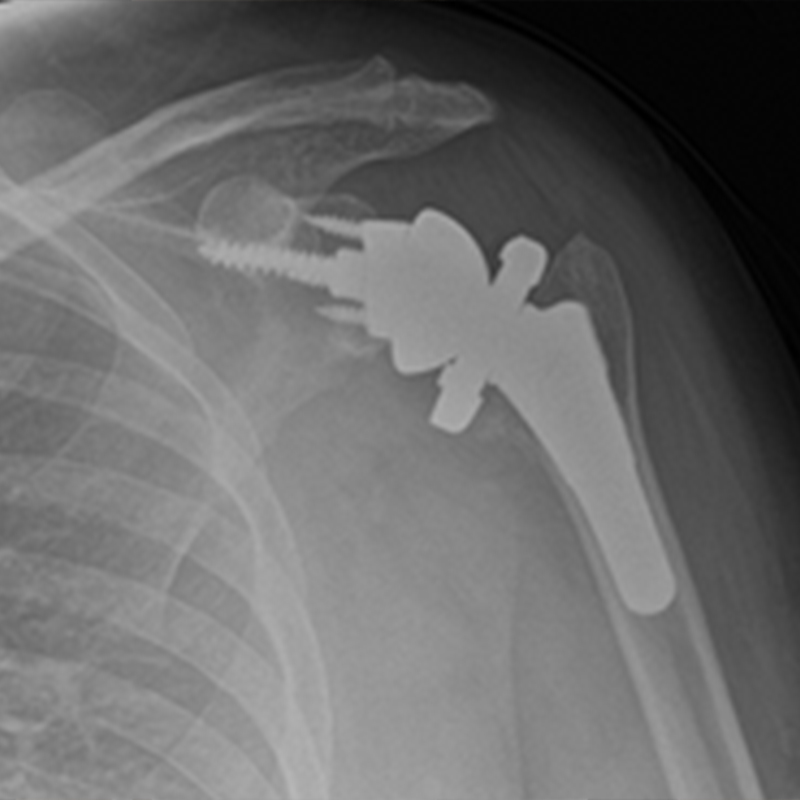
Why Consider a Shoulder Replacement?
Shoulder replacement surgery is usually considered when you have:
- Osteoarthritis: Wear and tear of the joint.
- Rheumatoid arthritis: An inflammatory condition.
- Complex shoulder fractures: Problems after a severe break.
- A Rotator cuff damage: When the muscles around your shoulder are badly damaged.
- Other injuries or conditions that cause pain and restrict function.
The primary aim of a shoulder replacement is to reduce pain and restore some of the lost functions, though it might not dramatically improve your range of movement.
Types of Shoulder Replacement
There are a few types of shoulder replacement procedures:
- Total Shoulder Replacement: The most common type, where both the ball of the humerus and the socket of the
scapula are replaced with artificial components - Reverse Shoulder Replacement: The ball and socket are reversed, with the ball being attached to the shoulder
blade and a socket attached to the upper arm. This is often done when the rotator cuff muscles are badly damaged. - Partial Shoulder Replacement (Hemiarthroplasty): Only the ball of the humerus is replaced.
- A Resurfacing Shoulder Replacement: Only the worn surfaces of the joint are replaced. Your surgeon will discuss which type is best for your situation.
What to Expect During Surgery
The surgery usually takes around 1 to 2 hours and is performed under general anaesthetic, often with a nerve block to help with pain management after surgery.
During the operation:
- An incision will be made at the front of your shoulder.
- Damaged bone and cartilage will be removed from the shoulder joint.
- The artificial joint is implanted.
- The incision is closed with stitches and a dressing is applied.
Recovery After Surgery
Recovery can take time, often with improvements for up to 12 months, but it can take up to two years for full range of movement improvements. Here’s what to expect:
- Sling: You’ll wear a sling to support your arm, initially all the time, then reducing as your recovery progresses
- Pain Relief: You’ll be given pain medication to manage discomfort. Ice packs can help reduce swelling.
- Physiotherapy: This will begin soon after surgery. You’ll be given exercises to improve your range of motion, strength and function.
- Wound care: Keep your wound clean and dry.
- Driving and work: Avoid driving whilst wearing a sling. Return to work depends on the type of work you do.
- Restrictions: Avoid lifting, pushing, and reaching above shoulder height for some weeks.
It’s important to follow your healthcare team’s instructions and to be patient, as the shoulder will take time to improve.

Potential Risks and Complications
As with any surgery, shoulder replacement does have some risks, although they are not common:
- Infection: A risk at the surgical site or in the joint.
- Fracture: A break in the bone during or after surgery.
- Instability/Dislocation: The joint may come out of its socket.
- Loosening of the prosthetic: The artificial joint may loosen over time
- Fracture of around the implant. Either around the time of the operation or many years later
- Rotator cuff tear: The tendons may tear.
- Pain: Some pain is normal, but it should be managed.
- Scarring: Scar tissue formation.
- Blood clots: Clots can form in the veins.
Your surgeon will discuss these risks with you before the operation.
Alternatives to Shoulder Replacement
Surgery is usually only recommended when other treatments haven’t worked . Alternatives can include:
- Painkillers (paracetamol or ibuprofen).
- Exercise and physiotherapy.
- Steroid injections into the shoulder joint.
- Shoulder arthroscopy (keyhole surgery).
FAQs About Shoulder Replacements
What is the success rate of shoulder replacement surgery?
Shoulder replacement surgery is generally considered successful, with 85% of people experiencing good or excellent pain relief one year after surgery. Most replacements are expected to function well 10 years after the surgery.
How long does a shoulder replacement last?
An artificial shoulder joint typically lasts for at least 10 years, and often much longer. Implants can sometimes loosen or wear out over time.
What is a reverse shoulder replacement?
A reverse shoulder replacement is a surgery where the usual positions of the ball and socket are switched. This is often done when the rotator cuff muscles are badly damaged.
How long will I be in hospital?
The average hospital stay after shoulder replacement surgery is usually 2 to 3 days, but some patients may be suitable for day surgery.
How long before I can lift my arm after shoulder replacement?
You may be able to lift your arm to dress, wash, and cook within about 6 weeks, but full recovery can take 3-6 months and up to 2 years for full strength. You will need to avoid any heavy lifting for at least six months.
When can I drive after shoulder replacement?
You cannot drive whilst wearing a sling. After that, you should be in control of your car , performa an emergency stop and you must check with your insurance company before you start driving again.

FAQs About The Upper Limb Clinic
What is The Upper Limb Clinic?
The Upper Limb Clinic is a specialised clinic focused on the care and treatment of conditions affecting the shoulder ,
elbow , wrist, and hand. We offer comprehensive assessment, diagnosis, and treatment for a variety of orthopaedic conditions.
What services do you offer?
We offer a range of services including:
- Consultations with specialist surgeons and physiotherapists
- Shoulder replacement surgery and other upper limb procedures
- Pre and post-operative care
- Physiotherapy and rehabilitation
- Personalised treatment plans
How can I book an appointment?
To book an appointment, please contact us at info@theupperlimbclinic.co.uk or visit our website at this link. Our team is here to help you with your upper limb health needs.
Conclusion
Shoulder replacement surgery can be a life-changing option for those experiencing significant shoulder pain and limited movement. If you have any questions about shoulder replacement, please don’t hesitate to get in touch with our clinic for expert advice and support. We aspire to understand what you enjoy in life and plot a path to get you back to it, helping you return to the activities you love with confidence and full function.
